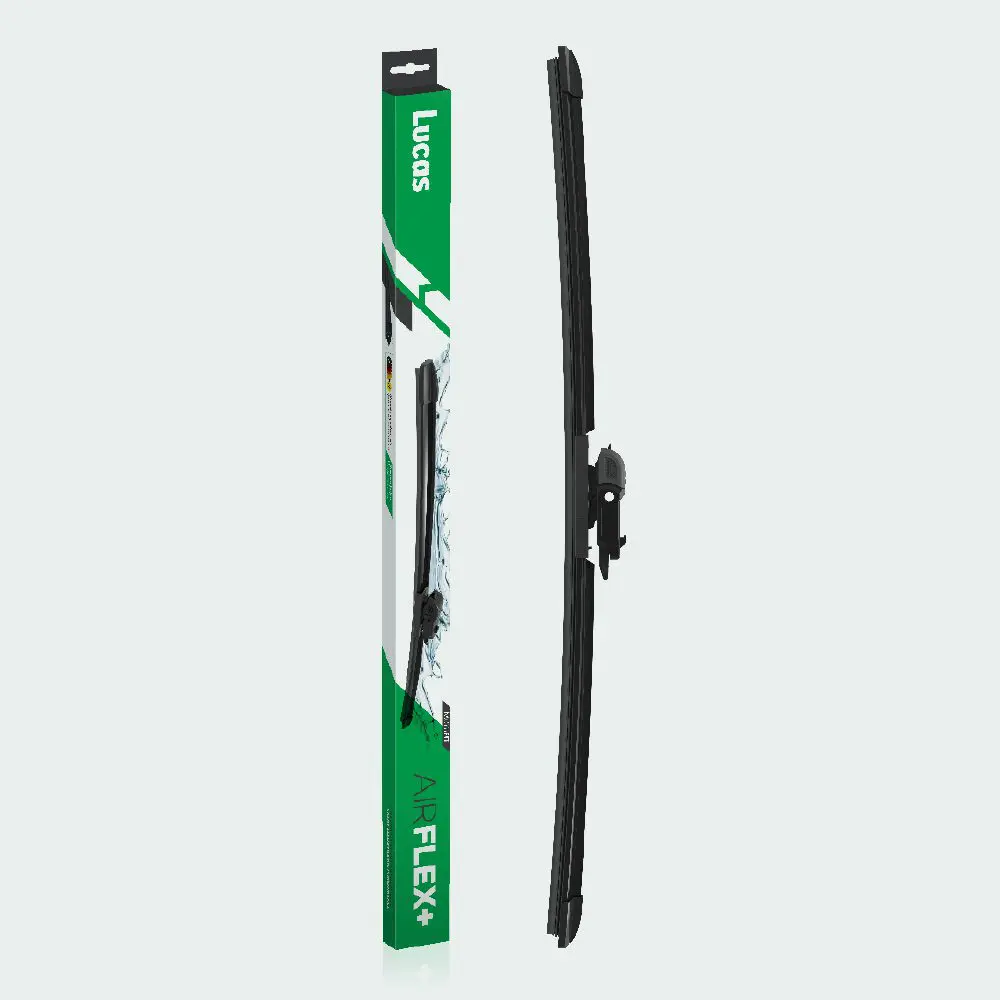
UltraBLADE Conventional Wipers

When only the highest quality will do, Lucas UltraBLADE is the conventional wiper blade of choice. Designed for universal fit and crafted to meet the demands of the modern aftermarket, UltraBLADE combines strength, durability, and refined performance to deliver a truly premium solution.
A powder-coated metal frame provides a thick protective layer that resists rust and corrosion. Built to last, UltraBLADE ensures dependable performance in all weather conditions.
With premium-grade rubber and a graphene coating, UltraBLADE wipes cleanly and quietly from the very first use — delivering a streak-free screen with no squeak or judder.
A riveted frame design ensures consistent pressure and better windscreen contact, while TÜV-approved manufacturing guarantees trusted quality and total peace of mind.

Conventional wipers are one of the most frequently replaced service parts. StockASSIST highlights the most popular lengths and fittings, ensuring factors always carry the right range for fast, profitable turnover.
Here are 10 common vehicles in the UK Parc that use conventional wiper blades:


LWCB22 & LWCB16
1. Ford Fiesta (V)
LWCB22 & LWCB16
Model: Ford Fiesta MkV
Years: 2002–2008
Blade Type: Conventional Blades
Driver: LWCB22 - 22"/550mm Wiper Blade
Passenger: LWCB16 - 16"/410mm Wiper Blade
Vehicle Parc UK: 305,212

LWCB23 & LWCB14
2. Nissan Juke (F15)
LWCB23 & LWCB14
Model: Nissan Juke F15
Years: 2010–2019
Blade Type: Conventional Blades
Driver: LWCB23 - 23"/580mm Wiper Blade
Passenger: LWCB14 - 14"/350mm Wiper Blade
Vehicle Parc UK: 277,192

LWCB22 & LWCB16
3. Hyundai i10 (PA)
LWCB22 & LWCB16
Model: Hyundai i10 (PA)
Years: 2007–2015
Blade Type: Conventional Blades
Driver: LWCB22 - 22"/550mm Wiper Blade
Passenger: LWCB16 - 16"/410mm Wiper Blade
Vehicle Parc UK: 170,525

LWCB19 & LWCB18
4. MINI (R50/R53)
LWCB19 & LWCB18
Model: MINI (R50/R53)
Years: 2001–2004
Blade Type: Conventional Blades
Driver: LWCB19 - 19"/480mm Wiper Blade
Passenger: LWCB18 - 18"/450mm Wiper Blade
Vehicle Parc UK: 119,438

LWCB21 & LWCB19
5. Volkswagen Golf (IV)
LWCB21 & LWCB19
Model: Volkswagen Golf MkIV
Years: 1997–2003
Blade Type: Conventional Blades
Driver: LWCB21 - 21"/530mm Wiper Blade
Passenger: LWCB19 - 19"/480mm Wiper Blade
Vehicle Parc UK: 103,938

LWCB22 & LWCB16
6. Citroen Berlingo / First
LWCB22 & LWCB16
Model: Citroen Berlingo / Berlingo First
Years: 1996–2013
Blade Type: Conventional Blades
Driver: LWCB22 - 22"/550mm Wiper Blade
Passenger: LWCB16 - 16"/410mm Wiper Blade
Vehicle Parc UK: 63,550

LWCB24 & LWCB22
7. Mercedes benz C-Class (W203)
LWCB24 & LWCB22
Model: Mercedes benz C-Class (W203)
Years: 1977–2007
Blade Type: Conventional Blades
Driver: LWCB24 - 24"/610mm Wiper Blade
Passenger: LWCB22 - 22"/550mm Wiper Blade
Vehicle Parc UK: 48,440

LWCB22 & LWCB16
8. Nissan NV200 Van
LWCB22 & LWCB16
Model: Nissan NV200
Years: 2009>
Blade Type: Conventional Blades
Driver: LWCB22 - 22"/550mm Wiper Blade
Passenger: LWCB16 - 16"/410mm Wiper Blade
Vehicle Parc UK: 29,929

LWCB22 & LWCB16
9. Range Rover Sport (L320)
LWCB22 & LWCB16
Model: Range Rover Sport (L320)
Years: 2002–2008
Blade Type: Conventional Blades
Driver: LWCB22 - 22"/550mm Wiper Blade
Passenger: LWCB16 - 16"/410mm Wiper Blade
Vehicle Parc UK: 20,740

LWCB21 & LWCB18
10. Nissan Micra III (K12)
LWCB21 & LWCB18
Model: Nissan Micra III (K12)
Years: 2002–2010
Blade Type: Conventional Blades
Driver: LWCB21 - 21"/530mm Wiper Blade
Passenger: LWCB18 - 18"/450mm Wiper Blade
Vehicle Parc UK: 131,518

Rubber wear and cracking from UV, ozone, and temperature extremes
Bent or corroded metal frames reducing pressure and contact
Blockages in the hinge joints leading to streaks and uneven wiping
Incorrect fitment or poor-quality copies that fail prematurely
Smearing, streaking, or juddering across the windscreen
Missed areas of the glass (especially at the edges)
Increased glare at night due to uneven wiping film
Audible noise or vibration during operation
Always clean the windscreen before fitting a new blade.
Match the size and fitting type exactly to the vehicle’s OE specification.
Check the wiper arm spring tension — weak arms can reduce performance.
Advise drivers to replace blades annually, or sooner if visibility is impaired.
 For Technical Support – Start a WhatsApp Chat with our TechASSIST Experts