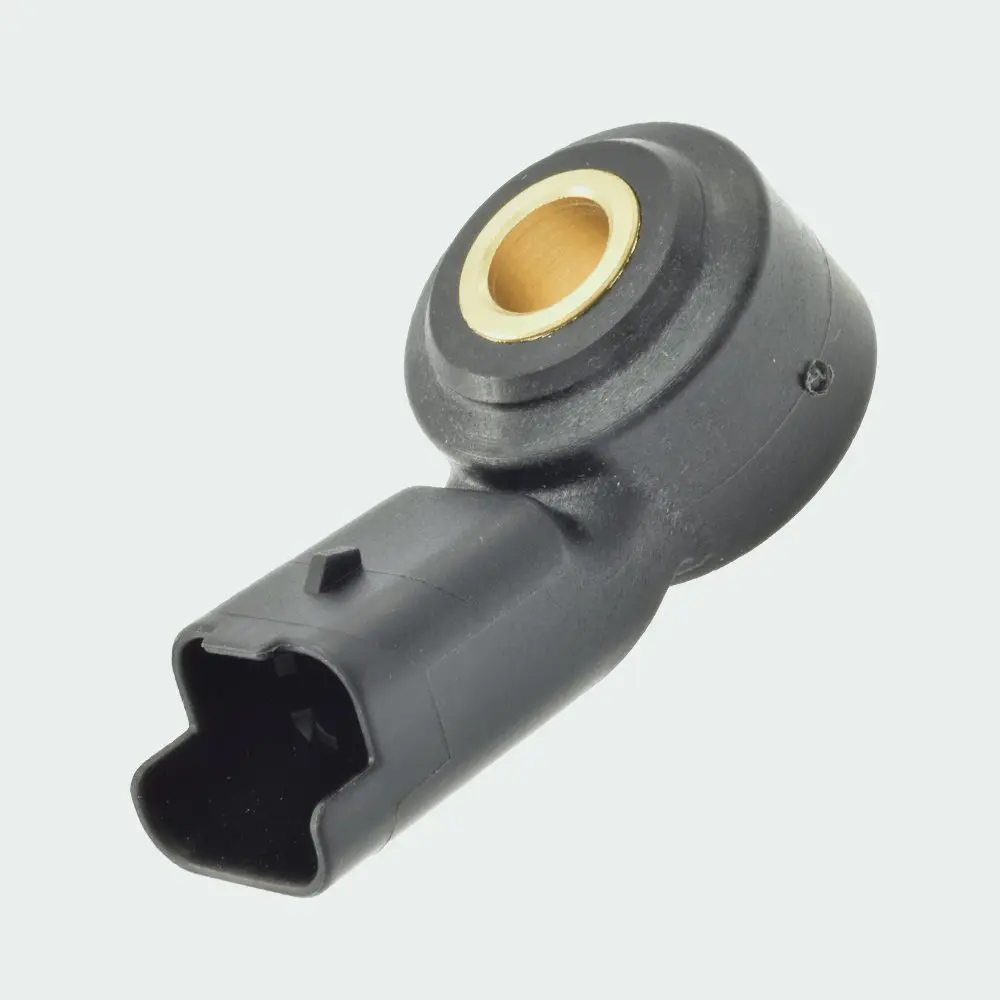
Manifold Absolute Pressure (MAP) Sensors

VXPRO MAP Sensors are designed to deliver OE-accurate air pressure readings to the engine control unit (ECU), enabling precise fuelling, ignition timing, and turbo boost regulation. Built for durability and precision, our sensors offer consistent performance across a wide range of naturally aspirated and turbocharged engines.
Backed by a 5-year warranty and supported by TechASSIST and StockASSIST, VXPRO MAP Sensors help independent workshops complete diagnostics and repairs with confidence — and Champion the Aftermarket with every job.

MAP sensors are critical, high-turnover components on a wide range of modern engines. StockASSIST helps distributors stay ahead by identifying and stocking the top references most likely to move — based on real UK car parc and usage data.
Here are 10 of the most requested MAP sensor references in our UK range:


EE2700
VXPRO MAP (Manifold Absolute Pressure) and Boost Pressure Sensor
EE2700
Replaces:
03G906051E
Applications:
Skoda Roomster, Yeti
Volkswagen Eos, Golf, Jetta, Polo, Scirocco, Sharan, Touran

EE2702
VXPRO MAP (Manifold Absolute Pressure) Sensor
EE2702
Replaces:
1829401, 2030369
Applications:
Ford Transit

EE2891
VXPRO MAP (Manifold Absolute Pressure) and Boost Pressure Sensor
EE2891
Replaces:
223657458R, 2236500QAG, 95517830
Applications:
Dacia Logan, Sandero
Infiniti Q
Nissan Micra, Note, NV200, Pulsar, Qashqai, X-Trail
Renault Captur, Kadjar, Kangoo, Koleos, Megane, Scenic, Trafic

EE2888
VXPRO MAP (Manifold Absolute Pressure) Sensor
EE2888
Replaces:
13627804742, 13628570118, 13628637896, 7804742, 8570118, 8637896, 89420WA010, 89421WAA01
Applications:
BMW 1 Series, 2 Series, 3 Series, 4 Series, 5 Series, 6 Series, 7 Series, X1, X2, X3, X4, X5, X6
Mini MINI
Toyota Avensis, Verso

EE2784
VXPRO MAP (Manifold Absolute Pressure) Sensor
EE2784
Replaces:
9675379580, 1682141, 1762251, 1913600, AG919F479AA, AG919F479AB, AG919F479AC, AG9Z9F479A, AG9Z9F479B, C2G2675, LR022157, LR038762, LR075167, U20218211, 31316349, 31338107, 31460674
Applications:
Ford Focus, Galaxy, Mondeo, Ranger, S-MAX, Transit Connect, Transit Courier, Transit Custom, Transit
Land Rover Defender, Range Rover
Volvo S60, S80, V60, V70, XC60

EE2705
VXPRO MAP (Manifold Absolute Pressure) Sensor
EE2705
Replaces:
1920CZ, 9639027480, 9639469280, 1231463, 1256481, 1468879, 3M5A12T551AA, 3M5A12T551AC, 13627794981, 1859069K00000, 1859073J00000, 31216185, 8670292
Applications:
Citroen Berlingo, C2, C3, C4, C5, C8, Dispatch, Xsara
Fiat Scudo
Ford C-MAX, Fiesta, Focus, Fusion, Kuga
Mazda 2, 3
Mini MINI
Peugeot 1007, 206, 207, 307, 308, 407, 508, 607, 807, 3008, 5008, Expert, Partner
Suzuki SX4
Volvo C30, C70, S40, S80, V50, V70
EE2734
VXPRO MAP (Manifold Absolute Pressure) Sensor
EE2734
Replaces:
1235060, 1238395, 1238894, 12591290, 55573248, 93192107
Applications:
Chevrolet Aveo, Spark
Opel Adam, Ampera, Antara, Astra, Corsa, GTC, Insignia, Meriva, Zafira Tourer, Zafira
Vauxhall Adam, Corsa, Insignia, Meriva, Mokka X, Mokka, Zafira Tourer, Zafira

EE2710
VXPRO MAP (Manifold Absolute Pressure) and Boost Pressure Sensor
EE2710
Replaces:
1136735, 99VW9E928AB, 038906051B, 03G906051D, 03C906051J, 03F145673F, 04E906051A
Applications:
Audi A2, A3, A4
Seat Alhambra, Cordoba, Ibiza, Leon, Toledo
Skoda Fabia, Octavia, Superb
Volkswagen Beetle, Caddy, Golf, Jetta, Lupo, Polo, Sharan, Touran

EE2747
VXPRO MAP (Manifold Absolute Pressure) and Boost Pressure Sensor
EE2747
Replaces:
1920LG, 9649396580, 1438809, 6G9Q9F479AB, C2Z14334, LR001324, 1865A122
Applications:
Ford Galaxy, Mondeo, S-MAX
Jaguar/Daimler XF
Land Rover Discovery Sport, Freelander, Range Rover
EE2709
VXPRO MAP (Manifold Absolute Pressure) and Boost Pressure Sensor
EE2709
Replaces:
1503280, 6C119F479AB, M9101473, 1372511
Applications:
Citroen Relay
Ford Transit
Peugeot Boxer

MAP sensors are exposed to pressure, heat, and sometimes contamination. Common causes of failure include:
Internal sensor degradation over time, leading to signal drift or incorrect readings
Blockages from oil mist or carbon deposits in the intake tract
Vacuum leaks or split hoses (on sensors with remote mounting)
Wiring faults or corroded connectors, especially in underbonnet environments
Water or moisture ingress through faulty seals or cracked housings
Rough idle or hesitation during acceleration
Poor fuel economy, especially at cruising speeds
Check Engine Light (MIL) illuminated, with codes such as P0105–P0109
Black smoke from the exhaust, caused by incorrect fuelling
Turbo lag or overboost, if MAP signal is used in boost control strategy
Engine stalling or failure to start, especially on turbocharged petrols
Inspect intake hoses and connections for leaks or splits before fitting a new sensor
Check and clean the sensor port if carbon buildup is visible
Ensure connectors are secure and corrosion-free before installation
Clear stored fault codes and verify live pressure readings after fitting
Avoid overtightening, especially with plastic housings — use OE torque specs
 For Technical Support – Start a WhatsApp Chat with our TechASSIST Experts