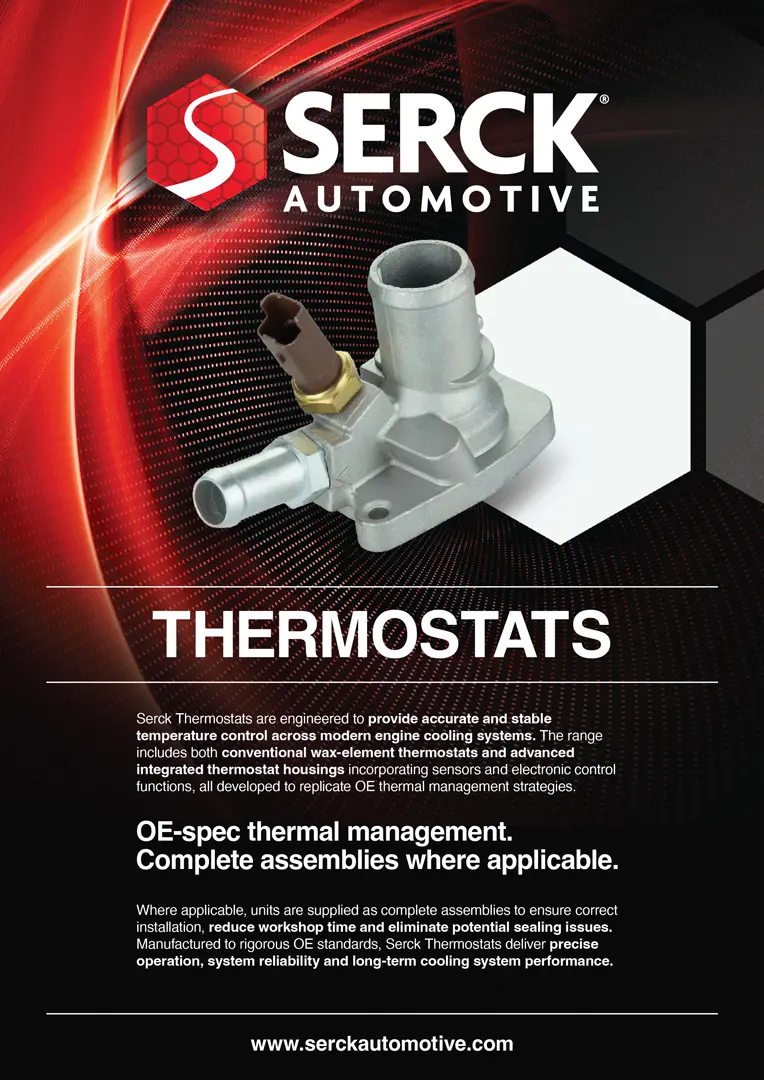
Thermostats and Housings

Serck thermostats are engineered to provide accurate and stable temperature control across modern engine cooling systems. The range includes both conventional wax-element thermostats and advanced integrated thermostat housings incorporating sensors and electronic control functions, all developed to replicate OE thermal management strategies.
Where applicable, units are supplied as complete assemblies to ensure correct installation, reduce workshop time and eliminate potential sealing issues. Manufactured to rigorous OE standards, Serck thermostats deliver precise operation, system reliability and long-term cooling system performance.

Thermostats are a year-round seller — from cold-start concerns in winter to overheating in summer. With both traditional and housing-integrated options, StockASSIST helps you stock what sells, based on vehicle parc and sales history.
Here are 10 of the most in-demand thermostat applications in our UK range:


CTK0340
Serck Thermostat Assembly with Gasket
CTK0340
55193669, 55194029, 55202176, 55239819, 55250824, 55202371, 1535448, 1338271
Alfa Romeo MiTo
Chrysler Ypsilon
Fiat 500, 500L, Bravo, Doblo, Grande Punto, Panda, Punto Evo, Punto, Qubo
Ford Ka
Vauxhall Combo

CTK0947
Serck Thermostat Assembly with Seal
CTK0947
25200455, 55565336, 55579010, 55593034, 1338031, 1338251, 1338380
Chevrolet Orlando
Opel Adam, Astra, Cascada, Corsa, GTC, Insignia, Meriva, Mokka X, Mokka, Zafira Tourer
Vauxhall Adam, Astra, Cascada, Corsa, GTC, Insignia, Meriva, Mokka X, Mokka, Zafira Tourer

CTK0945
Serck Thermostat Assembly with Seal
CTK0945
25200454, 55561629, 55579011, 55593033, 1338029, 1338261, 1338379
Chevrolet Aveo, Cruze
Opel Adam, Astra, Corsa, Meriva
Vauxhall Adam, Astra, Corsa, Meriva
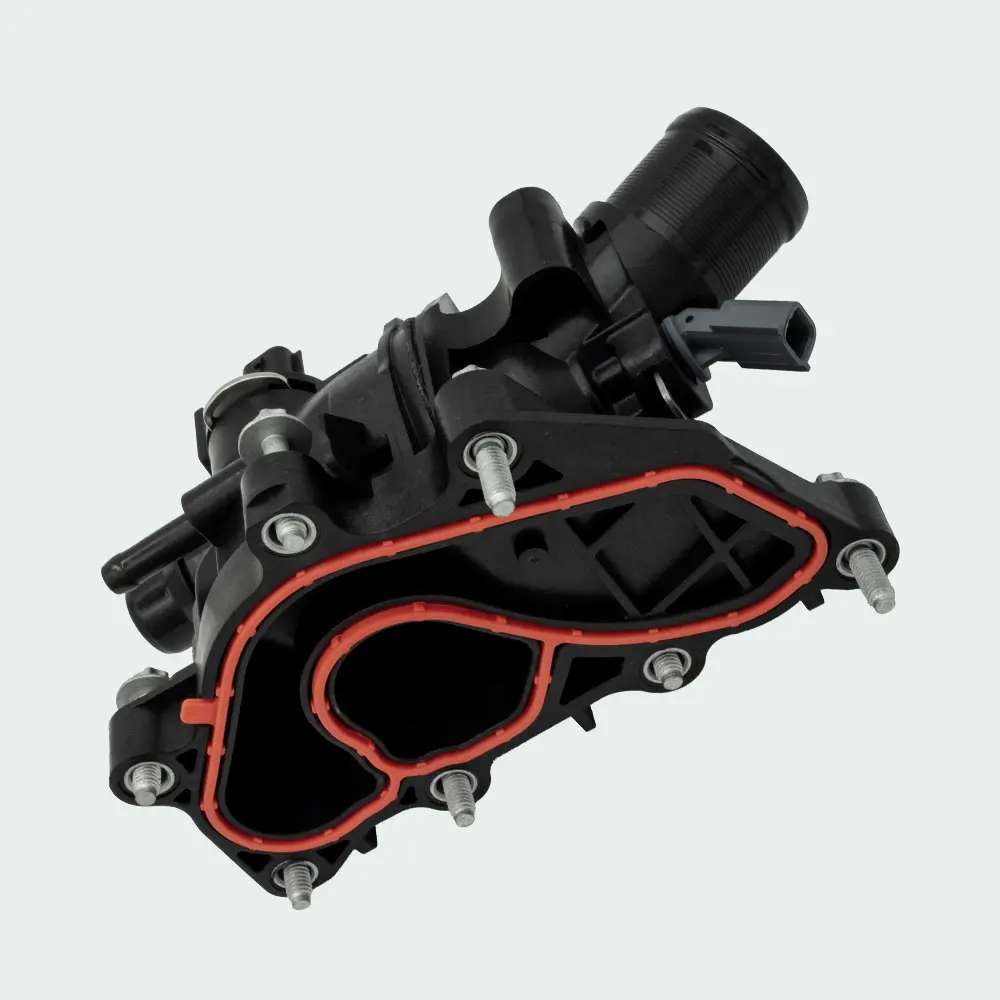
CTK1353
Serck Thermostat Assembly with Sensor
CTK1353
2822030175, A2822030175, FTK568, TH73698G1, 4006479
Mercedes-Benz A-Class, B-Class, CLA-Class, GLA, GLB
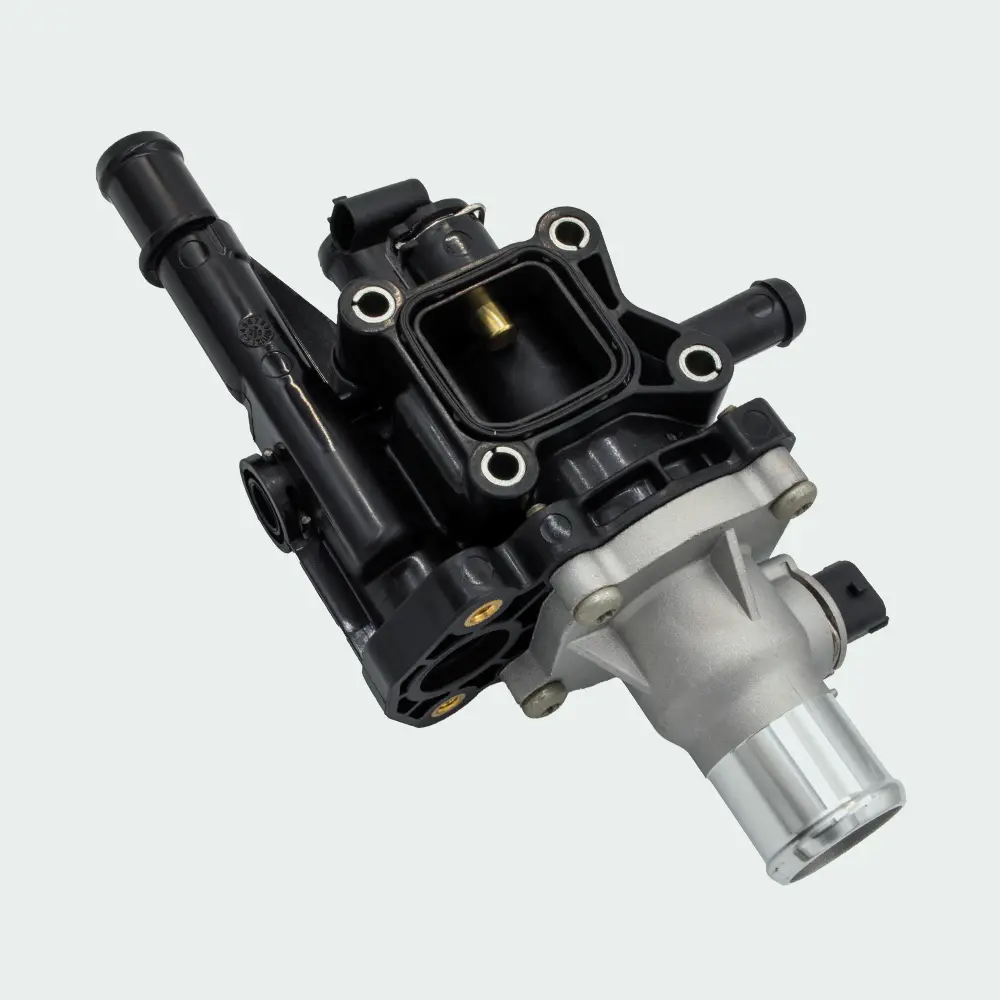
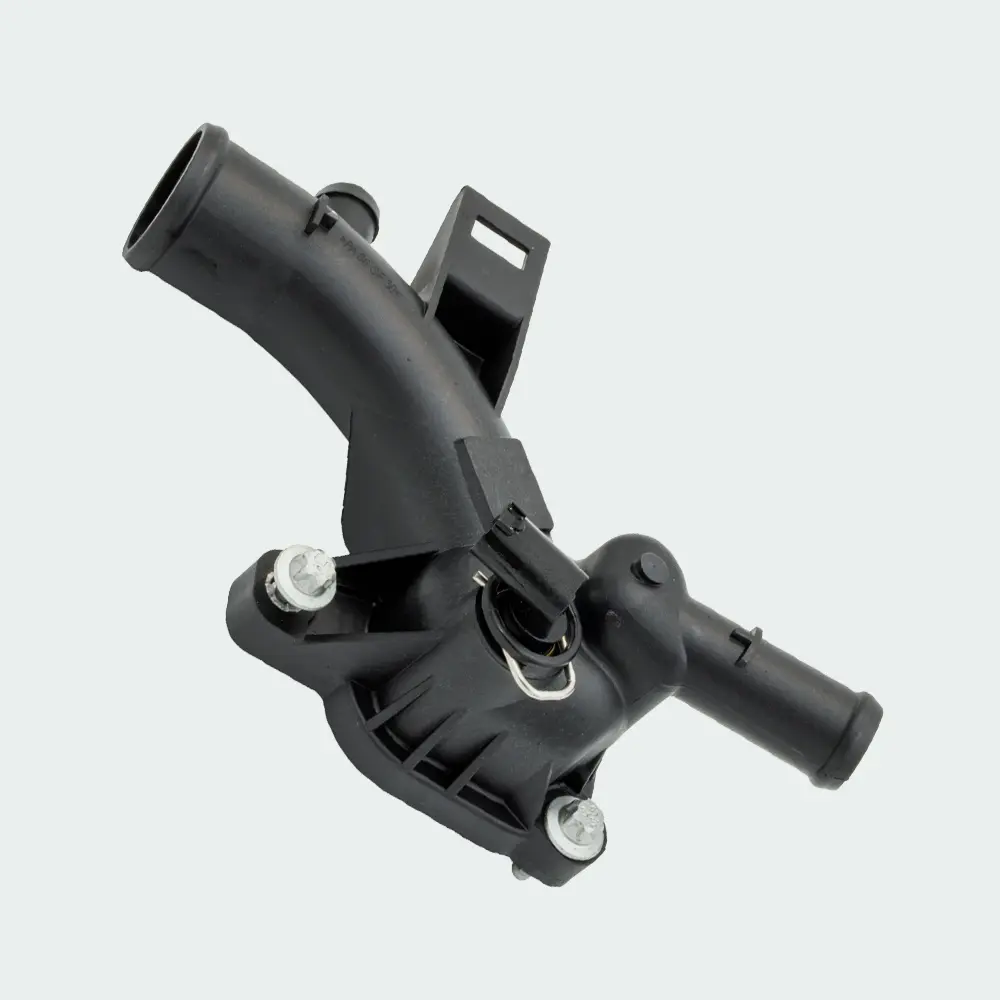
CCH0110KA
Serck Thermostat Housing Assembly
CCH0110KA
25192230, 55564890, 55577284, 55579951, 96984103, 1338177POF, 1338403POF, 6338044POF, 1338244, 1338256, 1338373, 1338384, 1338402, 55587350, 25192233POF, 55353311POF, 55559594POF, 55577073POF, 55578419, 96817255POF, CT9510, BBT554, TEK7277P.105J, 39145, FPK77330, TH611105G1, 77330, KER77330, LEM77330, LTEH77330, TA2003, QTH725CF2, CCH0110K, 208318
Chevrolet Trax
Opel Astra, Insignia, Mokka, Mokka X, Zafira, Zafira Tourer
Vauxhall Astra, Insignia, Mokka, Mokka X, Signum, Zafira, Zafira Tourer
CCH0073K
Serck Thermostat Housing Assembly
CCH0073K
55559594, 24405922, 24405922S1, 55577072, 55577072S1, 6338018, 6338018S1, 1338178, 1338178S1, 71739800, 25192233, 71744389, 71744389S1, 71770832, 71770832S1, 96980318, 96984104
Alfa Romeo 159
Fiat Croma
Opel Astra, Insignia, Meriva, Signum, Vectra, Zafira
Vauxhall Astra, Insignia, Meriva, Signum, Vectra, Zafira
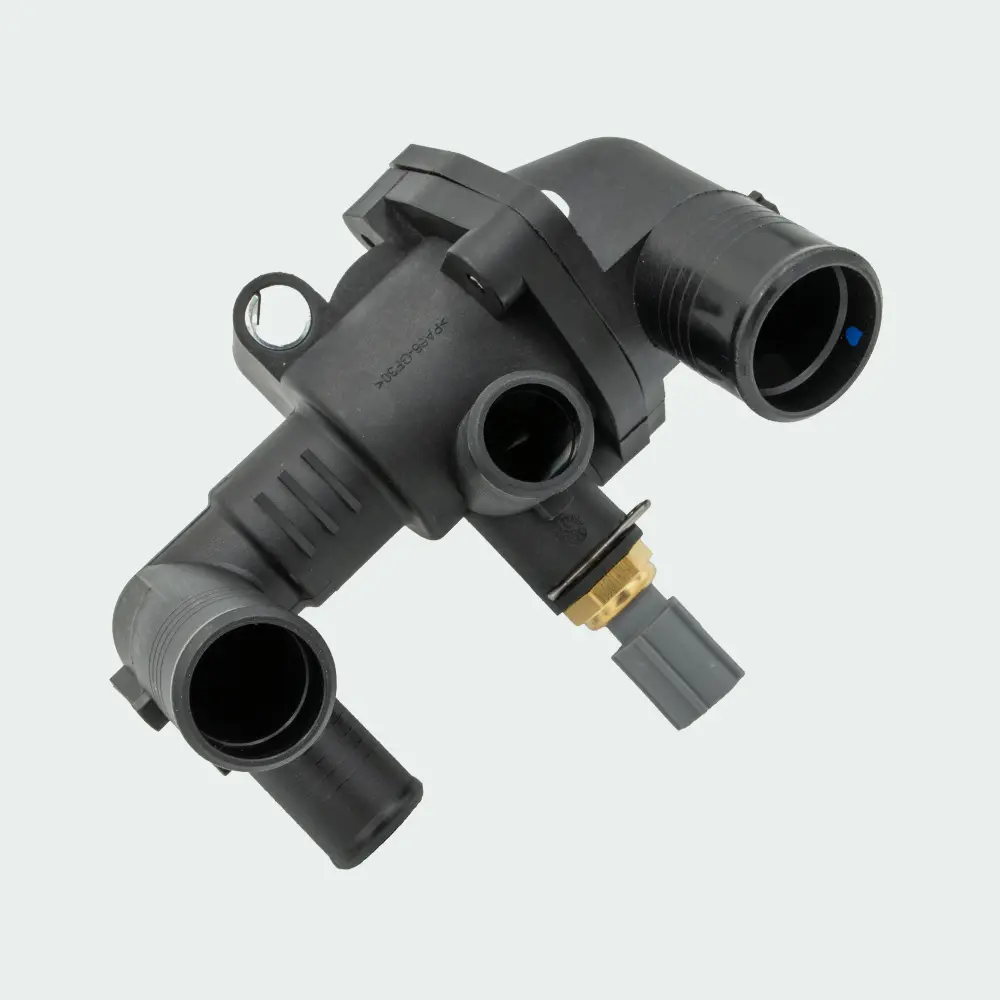
CCH0083
Serck Thermostat Housing Assembly
CCH0083
9091603106, 1338F5, 9678741380, LR004618, JDE1275, 9661331580, XS7Q8575AA, W703355S303, W704553S300, W707270S300, 1096283, 1098228, 1702985, 1109342, 1130311, 1731770, BK2Q8A586AB, 7M5112A648BA
Fiat Scudo
Ford Tourneo Custom, Transit, Transit Custom
Jaguar Various applications using OE reference JDE1275
Land Rover Various applications using OE reference LR004618
Peugeot Expert
Toyota Proace
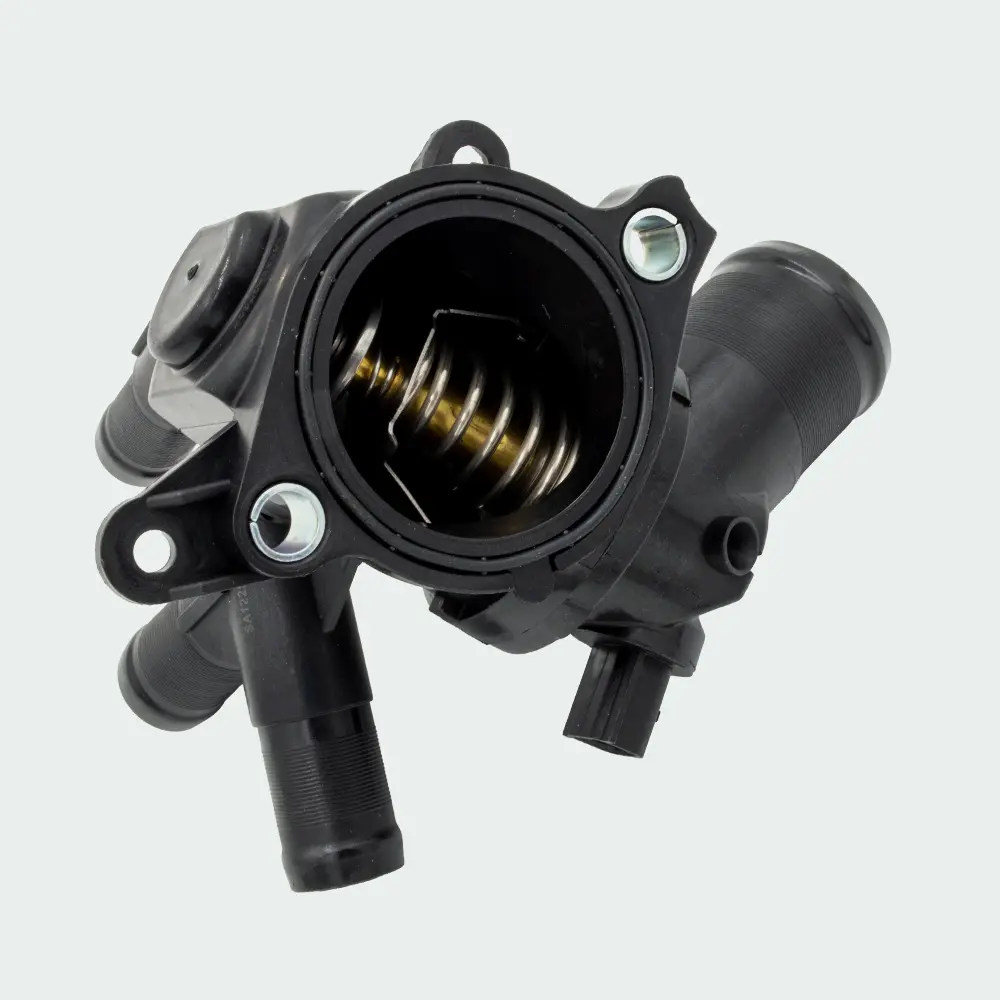
CTK1254
Serck Thermostat Assembly with Sensor
CTK1254
110617089R, 110619413R, 1106100Q1N, 1106100Q2H, A2002031700, A2822030075, 2002031700, 2822030075
Dacia Duster
Mercedes-Benz Citan
Nissan Juke, Pulsar, Qashqai
Renault Captur, Clio, Kadjar, Megane, Scenic
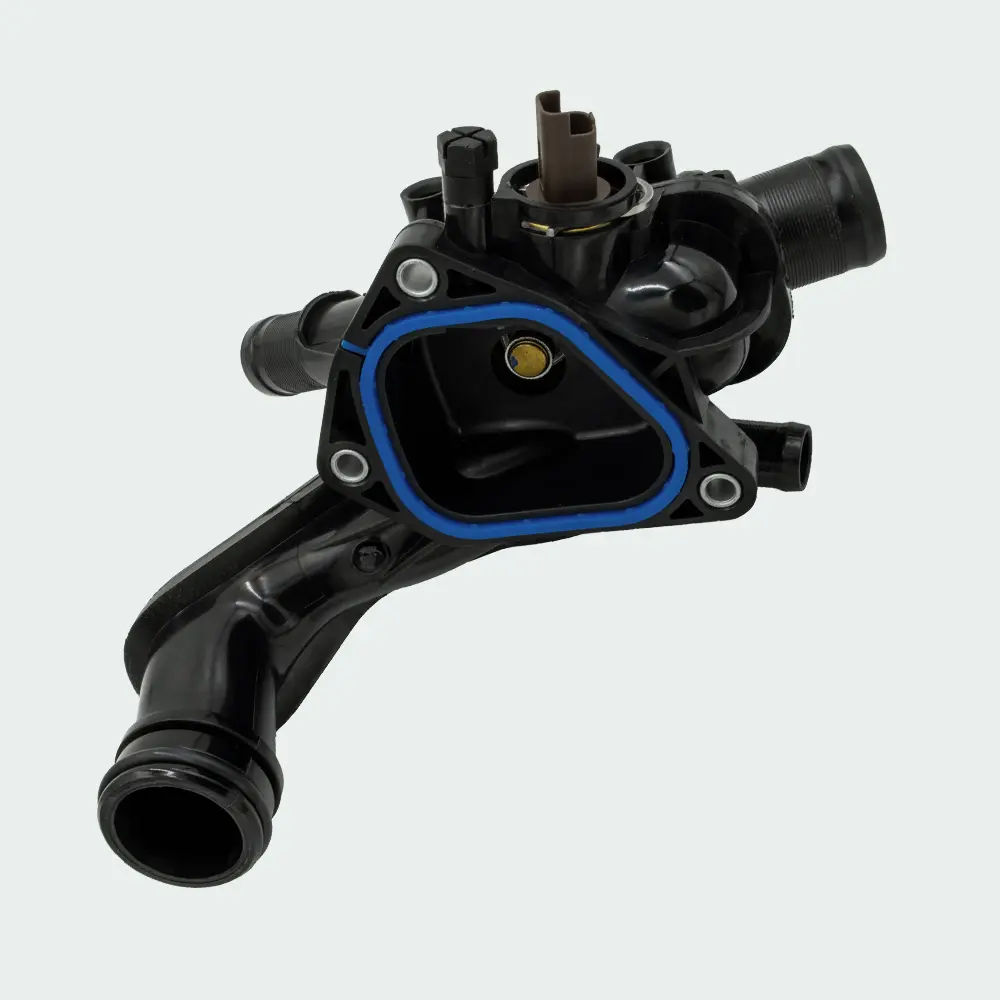
CTK0398
Serck Thermostat Assembly with Seal
CTK0398
9810916980, 1336Z6, 8699290, 11538699290, 11537534521, 7534521
BMW Various applications using OE references 8699290, 11538699290 and 11537534521
Citroën C4, DS3
MINI MINI
Peugeot 207, 308, 3008, 5008, RCZ
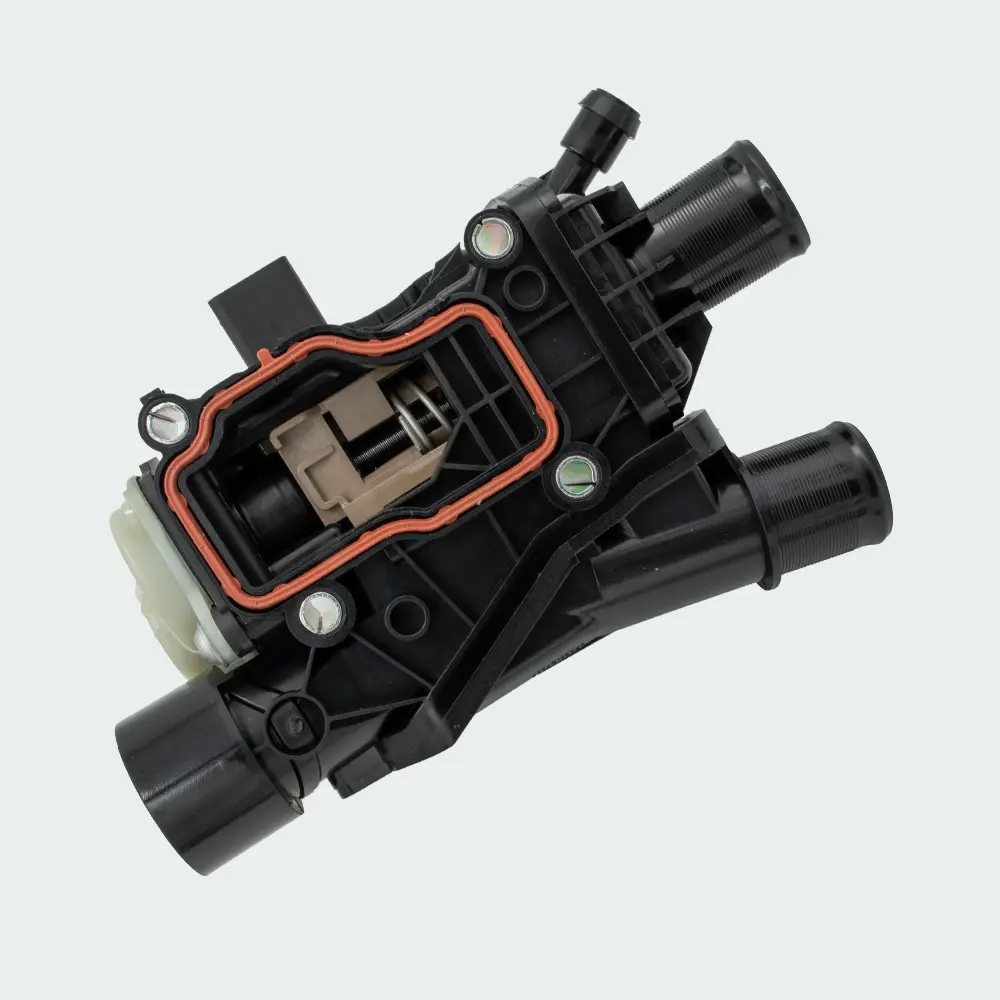
CTK1589
Serck Thermostat Assembly with Seal
CTK1589
9804160380, 9849443980, 1876476, 2264810, DS7Q8A586AA, DS7Q8A586AB
Citroën C4, C5, Dispatch, DS4, DS5, Relay, SpaceTourer
DS DS4, DS4 Crossback, DS5, DS7 Crossback
Ford C-MAX, Edge, Focus, Galaxy, Kuga, Mondeo, S-MAX
Opel Grandland X, Vivaro
Peugeot 308, 508, 3008, 5008, Boxer, Expert, Traveller
Vauxhall Grandland X, Vivaro
The thermostat is a vital part of the engine cooling system. It:
Whether a traditional thermostat insert or a housing-integrated assembly with sensors and electronic controls, reliable thermostat operation is essential for engine efficiency, emissions compliance and long-term durability.

Thermostats are subject to constant thermal cycling and can fail over time due to:
Sticking open, often due to internal wear, spring fatigue, or debris
Sticking closed, risking overheating and head gasket failure
Housing cracks or seal failure, especially on plastic-bodied types
Sensor failure, in electronically controlled units
Coolant contamination, leading to corrosion or scale build-up
Improper installation, such as airlocks or over-tightening housing bolts
Engine overheating, especially on long drives or in traffic
Poor cabin heating, caused by the thermostat stuck open
Slow warm-up, leading to poor fuel economy and increased emissions
Erratic temperature gauge, fluctuating or stuck in one position
Check Engine Light (MIL), particularly on electronically controlled types
Coolant leaks, often near the housing or pipe connections
Always replace the gasket or housing seal — never reuse the old one
Flush the cooling system before installation to remove contaminants
Ensure proper bleeding after refilling coolant — airlocks can cause false overheating
Use correct torque settings when fitting housings, especially plastic types
Check compatibility — some vehicles require temperature-controlled valves with integrated sensors or heaters
Radiator Caps
Maintain precise engine temperature for reliable performance and protection with Serck

Expansion Tanks
Maintain precise engine temperature for reliable performance and protection with Serck
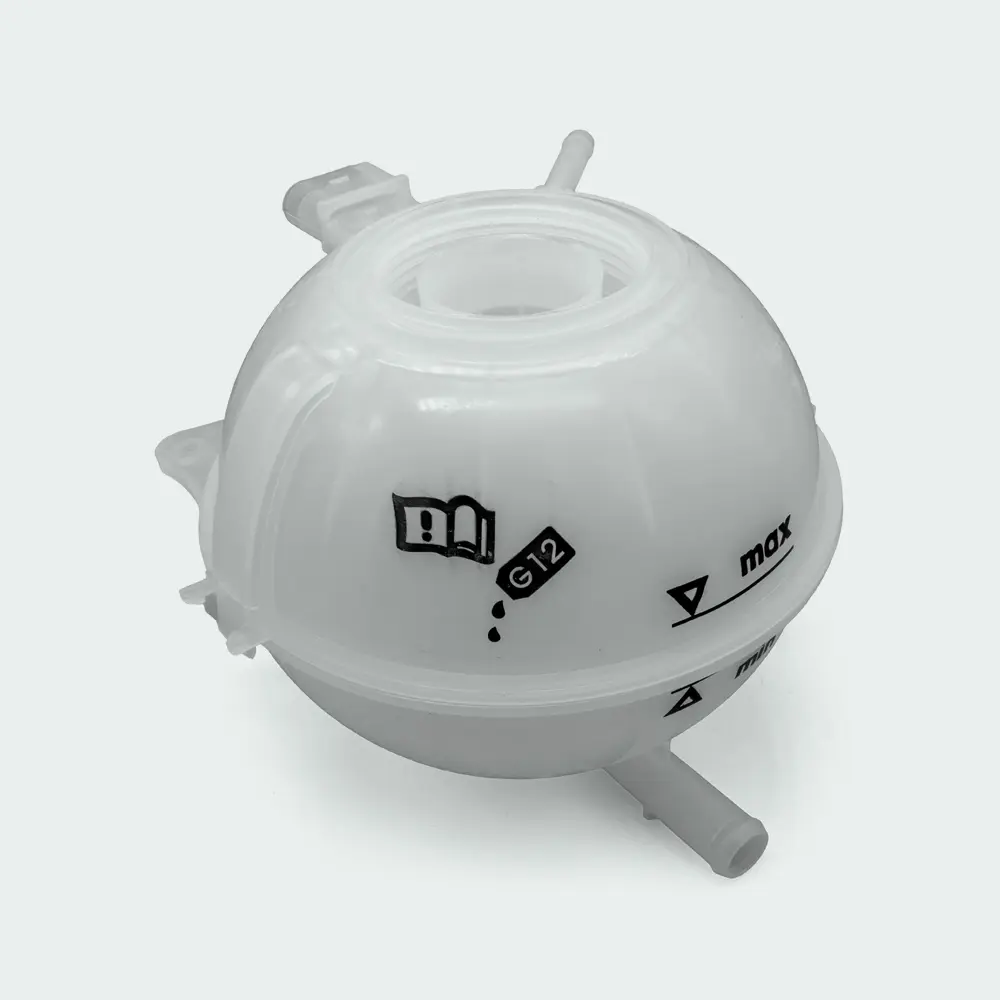
Coolant Flanges
Maintain precise engine temperature for reliable performance and protection with Serck
ELTA Updates
Get product news, technical insights and aftermarket updates from ELTA, straight to your inbox.
 For Technical Support – Start a WhatsApp Chat with our TechASSIST Experts