Category
ResourcesDate
October 14, 2026
New MOT rules mark an important step towards internationally approved LED replacement bulbs. ELTA explains what's changing, how the new system differs from earlier approvals and why the popular H4 and H7 bulb types are not yet included.
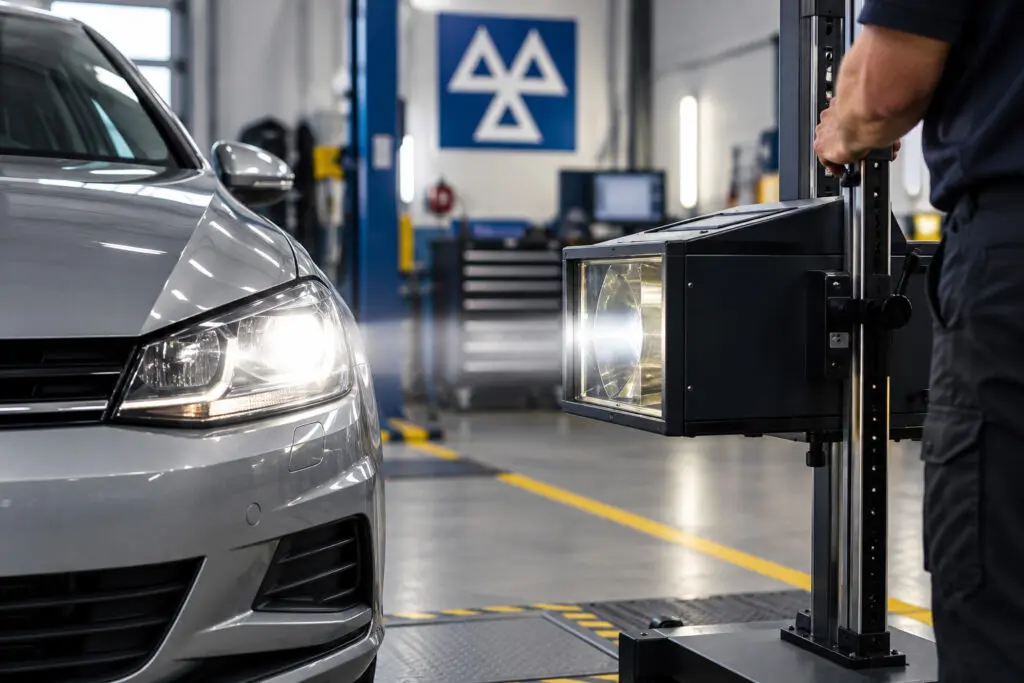
From 14 October 2026, new MOT inspection rules in Great Britain allow certain approved LED replacement bulbs to be fitted in compatible halogen headlamp units without automatically resulting in an MOT failure.
The change represents an important milestone in the evolution of automotive lighting, but its significance goes beyond the MOT itself.
For several years, major automotive lighting manufacturers have been developing LED replacements for conventional halogen bulbs. Some have already secured approvals allowing their products to be fitted legally to specific vehicles in certain European countries.
Now, a different approach is emerging. Internationally recognised standards are being introduced for individual LED replacement bulb categories, potentially opening the market to a much wider range of approved products.
However, the new rules do not mean that every LED replacement bulb is now road legal.
The story so far: Vehicle-specific LED approvals
In recent years, original equipment lighting manufacturers have introduced LED replacement bulbs approved for use in specific vehicle applications.
These products have received national approvals for particular vehicle models, headlamp configurations and lighting functions.
The approvals typically rely on compatibility lists specifying exactly which vehicles can use the relevant LED replacement.
Importantly, approval in one country does not necessarily mean the same product can legally be used in another.
For example, an LED replacement bulb may be approved for a particular Volkswagen Golf headlamp in Germany, but that approval does not automatically extend to every Golf model or to vehicles registered in other countries.
While these approvals have helped introduce LED technology into existing halogen headlamps, they have also created a relatively complex system for distributors, garages and motorists.
A new approach: Standardising the bulb, not the individual vehicle
The latest developments under UNECE Regulation 37 introduce a fundamentally different approach.
Rather than relying on separate approvals for individual vehicle applications, international regulators are establishing detailed technical specifications for LED replacement bulb categories.
These specifications, known as LEDr category sheets, define the requirements that an LED replacement must meet to function as an approved alternative to its corresponding conventional filament bulb.
They cover characteristics such as:
- Physical dimensions and fitting requirements.
- The position and geometry of the light-emitting area.
- Luminous output and light distribution.
- Electrical characteristics.
- Thermal performance.
- Other requirements designed to ensure appropriate operation and compatibility.
Manufacturers can develop LED replacement bulbs that conform to these specifications and submit their products for type approval.
When a product successfully completes the approval process, it can receive an E-mark demonstrating compliance with the relevant UNECE requirements.

This changes the principle of approval from individual vehicle applications to standardised replacement bulb categories.
It also creates opportunities for more manufacturers to participate in the market, encouraging competition, innovation and broader product availability.
A correctly approved LEDr bulb can be used as a replacement for the corresponding filament category in compatible applications, subject to applicable national rules and installation requirements.
What's changing for the UK MOT?
The Driver and Vehicle Standards Agency (DVSA) has updated the MOT inspection requirements to recognise ECE-approved LED replacement bulbs in compatible halogen headlamp units.
Effective from 14 October 2026, the change applies to vehicle classes 3, 4, 5 and 7, including most passenger cars and light commercial vehicles.
Previously, fitting LED conversion bulbs into existing halogen headlamps would generally result in an MOT failure.
Under the new guidance, approved LEDr products can now be accepted.
There is, however, an essential distinction.
Only products holding the appropriate approval qualify.
A replacement bulb that happens to fit an existing halogen headlamp, or is simply advertised as an LED upgrade, is not automatically compliant.
Which bulb types are covered?
The initial UNECE LEDr category specifications have focused primarily on bulb types associated with front fog lighting and other comparatively straightforward applications.
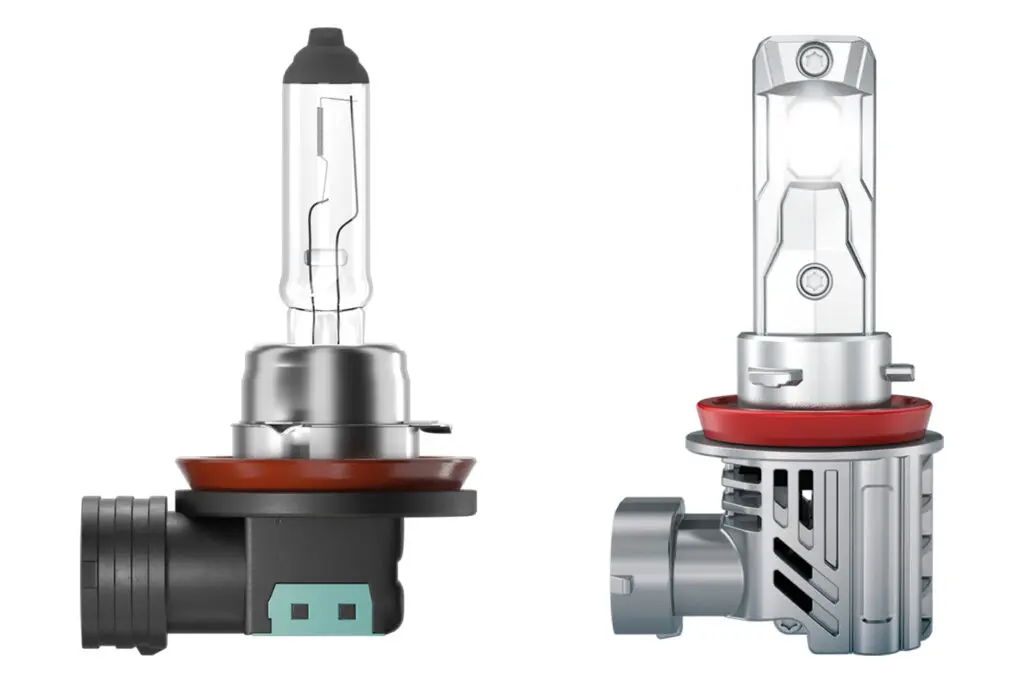
Established LEDr categories include H11, H8, H16 and HB4, subject to individual product approval.
Further categories, including H9, H10, HB3 and HIR2, are progressing through the international regulatory process.
However, the two most familiar halogen headlight bulb types, H4 and H7, are not yet included in the harmonised UNECE LEDr framework.
This is an important distinction.
Although certain H4 and H7 LED products have received vehicle-specific national approvals in some European markets, there is currently no corresponding UNECE R37 LEDr category providing the same generalised approval route.
Consequently, the new MOT guidance should not be interpreted as blanket permission to replace conventional H4 or H7 halogen bulbs with LED conversions.
Why are H4 and H7 taking longer?
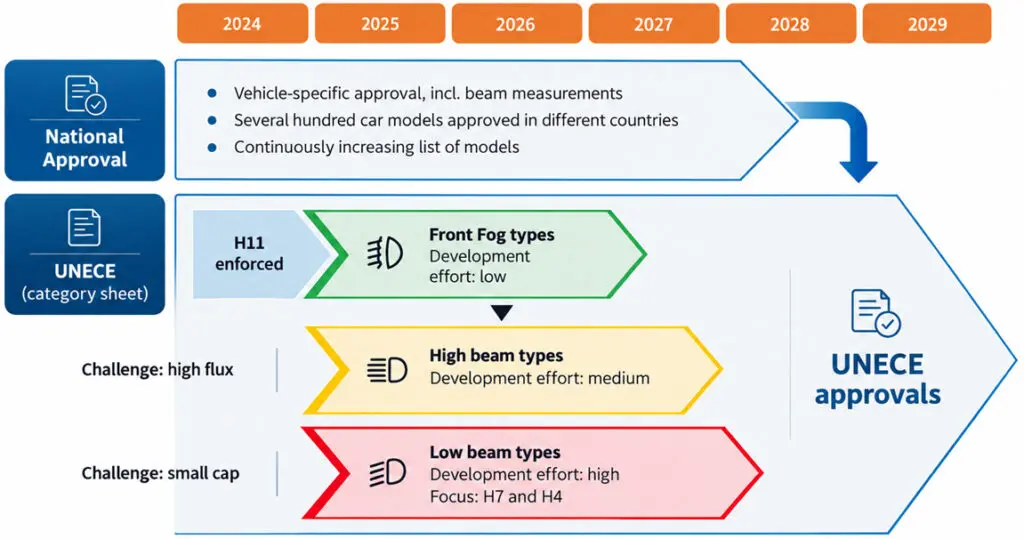
The international working groups responsible for developing LED replacement standards are taking a phased approach.
Initial efforts have concentrated on bulb categories where achieving the necessary technical equivalence with conventional filament light sources is comparatively straightforward.
H4 and H7 present additional challenges, particularly in dipped-beam headlamp applications.
Conventional halogen headlamps are designed around the precise position and shape of a filament. An LED replacement must reproduce the required light distribution accurately to preserve headlamp performance and avoid excessive glare to oncoming traffic.
The UNECE task force has classified H4 and H7 development as requiring a higher level of technical effort.
Regulators have also identified examples of non-compliant LED replacement products already entering the market, reinforcing the need for robust testing, approval and quality control.
There is currently no confirmed date for the introduction of harmonised H4 or H7 LEDr categories.
A new requirement for UK MOT testing
Alongside the recognition of approved LEDr bulbs, the DVSA has introduced an additional requirement for MOT testing.
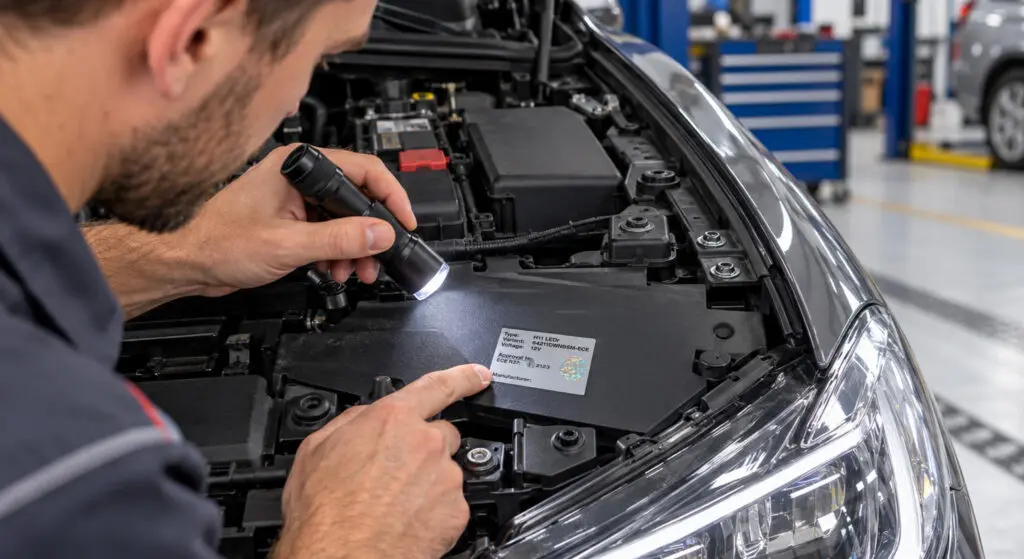
Vehicles fitted with approved LEDr bulbs in existing halogen headlamps must display a secure approval sticker, permanently attached to the vehicle in a position easily visible to the MOT tester.
The sticker must include:
- LEDr bulb category and variant.
- Rated voltage.
- ECE approval number.
- Manufacturer's name.
- A security feature, such as a hologram.
The vehicle will fail the relevant MOT inspection requirement if the sticker is missing, illegible, appears to have been tampered with or clearly does not correspond to the bulb fitted.
The sticker requirement is part of the British MOT inspection procedure. Requirements elsewhere in Europe may differ.
What does this mean for motor factors and garages?
The move towards standardised LEDr approvals represents a significant long-term opportunity for the automotive aftermarket.
As more bulb categories receive approval and more manufacturers introduce compliant products, garages and distributors could benefit from a wider choice of LED replacements.
However, it also places greater importance on understanding product approval.
A motor factor must distinguish between:
- A vehicle-specific LED replacement approved under a particular national scheme.
- An ECE-approved LEDr bulb conforming to an established UNECE category specification.
- An unapproved LED conversion bulb that may physically fit but does not hold the necessary approval.
These are not interchangeable classifications.
Garages should also ensure the correct bulb type is supplied, the required approval is present, and any applicable installation or labelling instructions are followed.
ELTA and Lucas: Preparing for the Next Generation of Automotive Lighting
As automotive lighting standards continue to evolve, ELTA is actively working with its manufacturing partners to bring approved LED replacement bulbs to the UK aftermarket.
Our manufacturing partners have already submitted products for the relevant approval processes, and we are awaiting confirmation of the outcomes.
The introduction of internationally recognised LEDr category specifications represents an important opportunity to make approved LED replacement technology more widely available.
ELTA is committed to supporting this transition responsibly, ensuring products meet the necessary standards before being introduced as approved replacements.
In the meantime, conventional halogen lighting remains highly relevant, particularly for the widely used H4 and H7 applications that are not yet covered by the new harmonised approval framework.
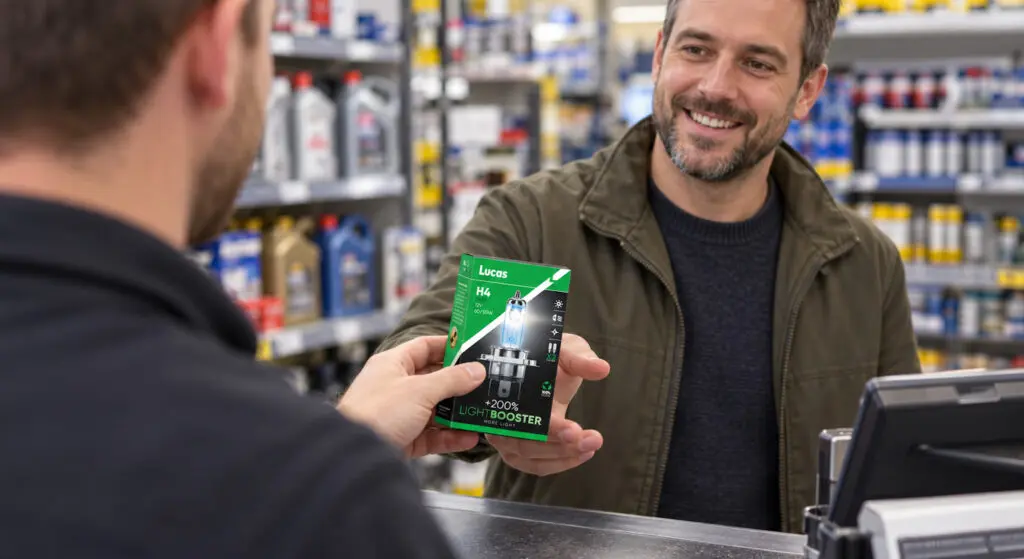
For motorists looking to improve their existing headlights, ELTA continues to offer halogen upgrades, including Lucas LightBOOSTER 200% for improved road illumination and Lucas WhiteBOOSTER 5000K for a whiter headlight appearance.
The future of replacement automotive lighting is evolving. ELTA is preparing for what comes next.
As new bulb categories and product approvals are introduced, we will continue to keep our customers informed, helping them make confident, compliant lighting choices.
Source: DVSA MOT Special Notice 05-26, effective 14 October 2026; UNECE Regulation 37 and associated LEDr category specifications.
LED Replacement Bulbs: FAQs
Understanding the new MOT rules and ECE-approved LED replacement bulbs.
Are LED headlight conversions legal now?
Certain ECE-approved LED replacement bulbs are now acceptable under the new MOT rules, provided they hold the correct approval and are fitted to compatible headlamp units.
Ordinary, unapproved LED conversion kits are not automatically compliant.
Haven't LED replacements already been approved in Europe?
Yes. In recent years, manufacturers have secured national approvals for LED replacements in specific vehicles and countries.
The new UNECE framework introduces a different approach, establishing technical standards for individual bulb categories rather than relying on vehicle-specific approval lists.
What's the difference between national and UNECE approval?
National approvals generally cover particular products fitted to specified vehicles or headlamp configurations, within countries recognising those approvals.
UNECE LEDr approvals are based on internationally recognised specifications for a particular bulb category, reducing the need for individual vehicle-specific approvals under that route.
Can any manufacturer produce approved LED replacement bulbs?
Any manufacturer capable of meeting the relevant technical requirements can apply for approval.
Products must be submitted for type approval and successfully demonstrate compliance before receiving the appropriate ECE approval and E-mark.
What is an LEDr category sheet?
An LEDr category sheet defines technical requirements for a particular LED replacement bulb type.
These include physical dimensions, light-emitting geometry, luminous output, electrical characteristics and other performance requirements.
These specifications allow manufacturers to develop replacement products against a common standard.
Can I replace my H7 or H4 halogen bulbs with LEDs?
Not under the new harmonised UNECE R37 LEDr framework.
H4 and H7 do not yet have established LEDr category specifications.
Although some products have obtained separate vehicle-specific approvals in certain European countries, those should not be confused with the new UK MOT provisions.
Which bulb types are currently covered?
Established LEDr categories include H11, H8, H16 and HB4.
Further categories, including H9, H10, HB3 and HIR2, are under consideration.
Every individual product must hold the appropriate approval. The existence of a category specification does not automatically approve every bulb of that type.
What is an E-mark?
An E-mark indicates that a product has received type approval under a relevant UNECE regulation.
For an LED replacement bulb, the approval must relate to the appropriate LEDr requirements.
An unrelated E-mark does not make an LED conversion bulb compliant.
What is the UK MOT approval sticker?
Under the new DVSA requirements, approved LEDr products fitted to halogen headlamps must have a secure approval sticker permanently attached to the vehicle in a position visible to the tester.
The sticker includes the bulb category, variant, voltage, approval number, manufacturer and a security feature.
Does an approved LEDr bulb guarantee an MOT pass?
No. The headlamp must still satisfy all other applicable MOT inspection requirements, including beam alignment, condition and performance.
Does Lucas currently offer approved LEDr bulbs?
Not yet. Our manufacturing partners have submitted products for approval, and we are awaiting confirmation of the outcomes.
Lucas is actively preparing to introduce appropriately approved LED replacement products as the regulatory framework develops.
What can I recommend for H4 or H7 headlights?
Lucas offers halogen lighting upgrades for suitable applications.
LightBOOSTER 200% is designed for customers seeking improved road illumination.
WhiteBOOSTER 5000K offers customers a whiter headlight appearance.
Always check the correct bulb type and vehicle application before selecting a replacement.